Lower back pain is one of the most common complaints among adults. Whether you're sitting at a desk all day, running regularly, or lifting weights, it's easy to feel tension in your lumbar region. The good news? Stretching your lower back can help relieve discomfort, improve mobility, and even prevent injuries when done consistently.
Why Your Lower Back Hurts
Lower back pain isn't always caused by one thing—it's usually a combination of lifestyle, movement habits, and muscle imbalances. Some common reasons include:
- Muscle tightness: Sitting for long periods shortens your hip flexors and tightens spinal muscles.
- Weak core or glutes: Without strong supporting muscles, your spine takes on extra stress.
- Poor posture: Slouching or rounding your back while sitting or lifting adds strain.
- Repetitive movements: Running, bending, or lifting incorrectly can irritate muscles and joints.
- Injuries or disc issues: Herniated discs, sciatica, or degenerative changes in the spine can make stretches feel uncomfortable.
Why Stretching Your Lower Back Matters
- Improve flexibility and range of motion
- Reduce stiffness after sitting or exercising
- Promote blood flow to spinal muscles
- Relieve mild discomfort and prevent imbalances
- Support core and glute strength for a healthier spine
Pro tip: Consistency beats intensity. Short daily sessions are more effective than occasional long stretches.
6 Practical Stretches for Your Lower Back
Hold each stretch for 20-30 seconds, repeat 2-3 times, and breathe deeply.
Knee-to-Chest Stretch
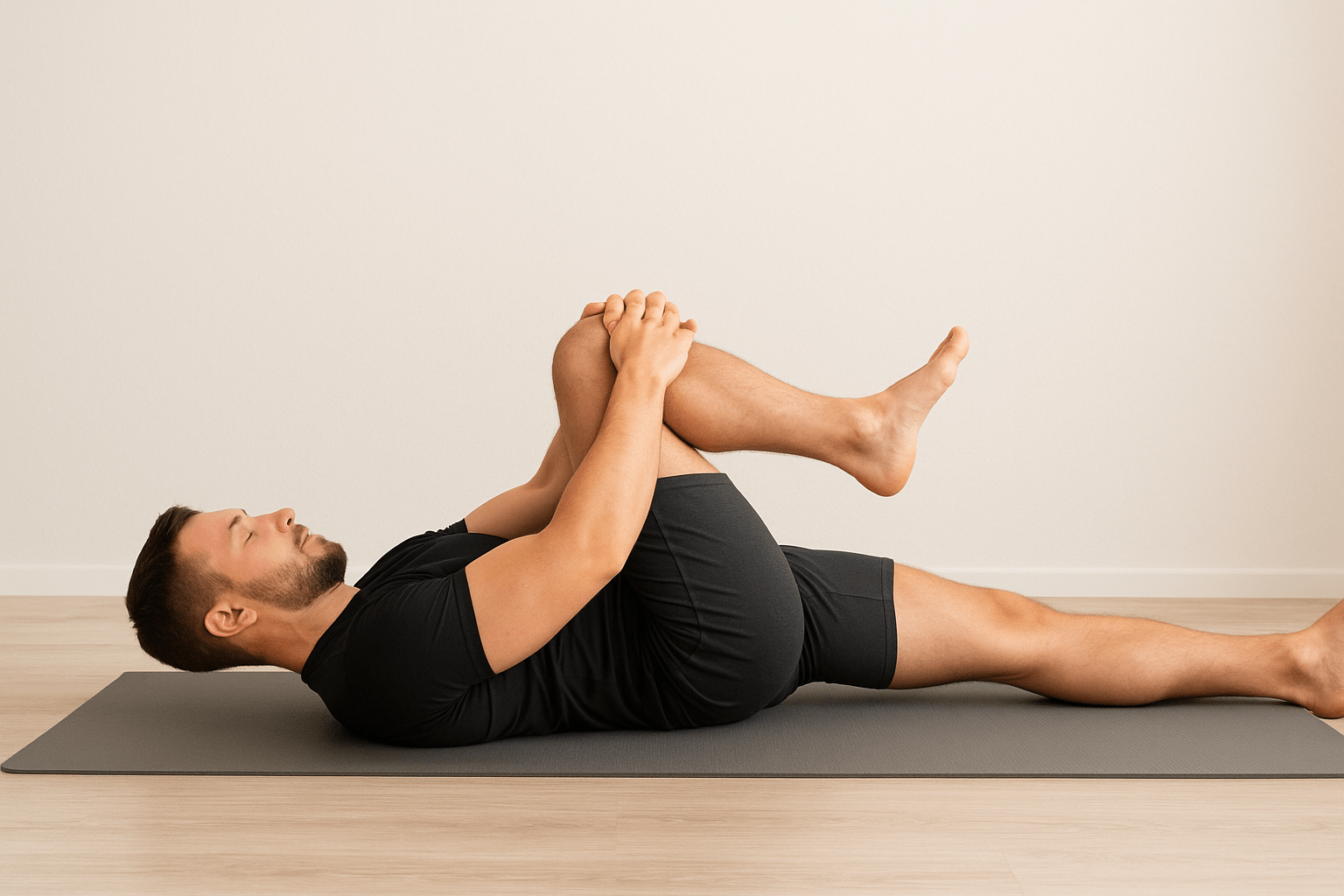
Lie on your back with knees bent. Pull one knee toward your chest while keeping the other foot on the floor. Switch sides.
Cat-Cow Stretch
On all fours, alternate between arching your back (cow) and rounding it (cat).
Child's Pose
Kneel on the floor, sit back on your heels, and reach your arms forward. Relax your lower back and hips.
Seated Spinal Twist
Sit on the floor with legs extended. Cross one leg over the other and twist toward the bent knee, placing your opposite elbow outside the knee.
Figure Four Stretch (Glute Stretch)
Lie on your back, cross one ankle over the opposite knee, and gently pull the bottom leg toward your chest.
Hamstring Stretch
Sit on the floor with one leg extended, hinge forward from the hips, and reach for your toes. Switch sides.
Tips for Making Stretches Part of Your Day
- Take breaks from sitting every 30-60 minutes to stand, walk, or stretch.
- Combine stretching with strengthening exercises for core, glutes, and hips.
- Avoid bouncing or forcing stretches—gentle tension is enough.
- Listen to your body. Sharp pain, tingling, or radiating discomfort is a sign to stop and get professional advice.
When to Get Professional Help
If your lower back pain lasts more than a few weeks, worsens, or radiates down your legs, see a physiotherapist, doctor, or qualified trainer. Stretching alone won't solve structural issues like herniated discs or nerve compression.
Make Your Routine Simpler
Managing stretches, exercises, and progress can feel overwhelming—especially if you're helping multiple clients or keeping track of your own routine. Tools like Motifind make it easy to structure programs, track progress, and stay consistent, all in one place.